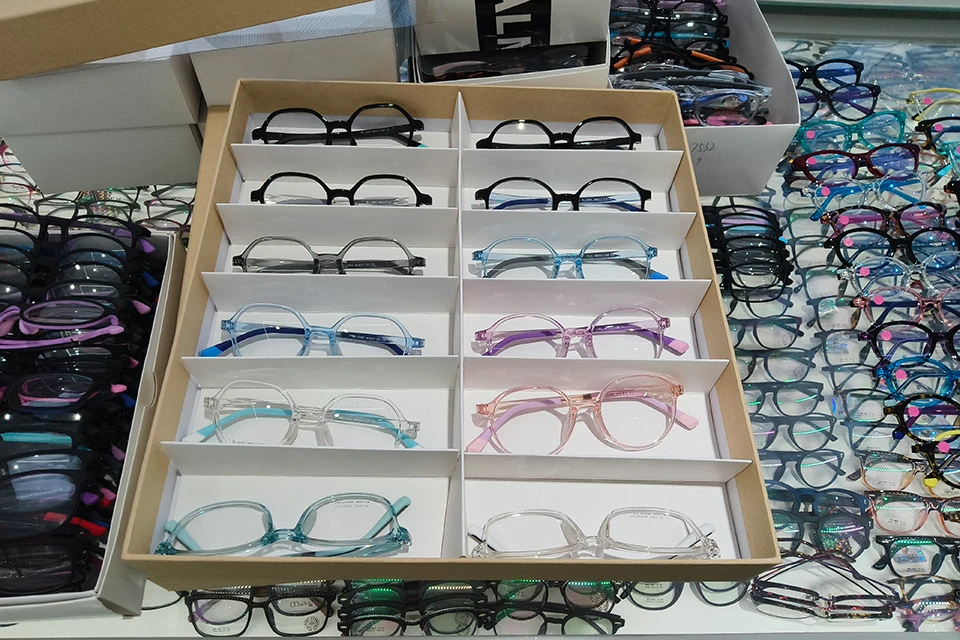
Acetate Eyewear Manufacturing: The Complete Sourcing, Material & OEM Guide for Global Buyers
Find everything importers, distributors, and brand owners need to know about acetate eyewear — from raw material grades and manufacturing processes to OEM customization, compliance certifications, and how to select the right factory partner. Whether you are launching a new acetate glasses line or scaling an existing collection, this guide covers the full sourcing journey from concept to delivery.
What Is Acetate and Why Is It the Premium Choice for Eyewear?
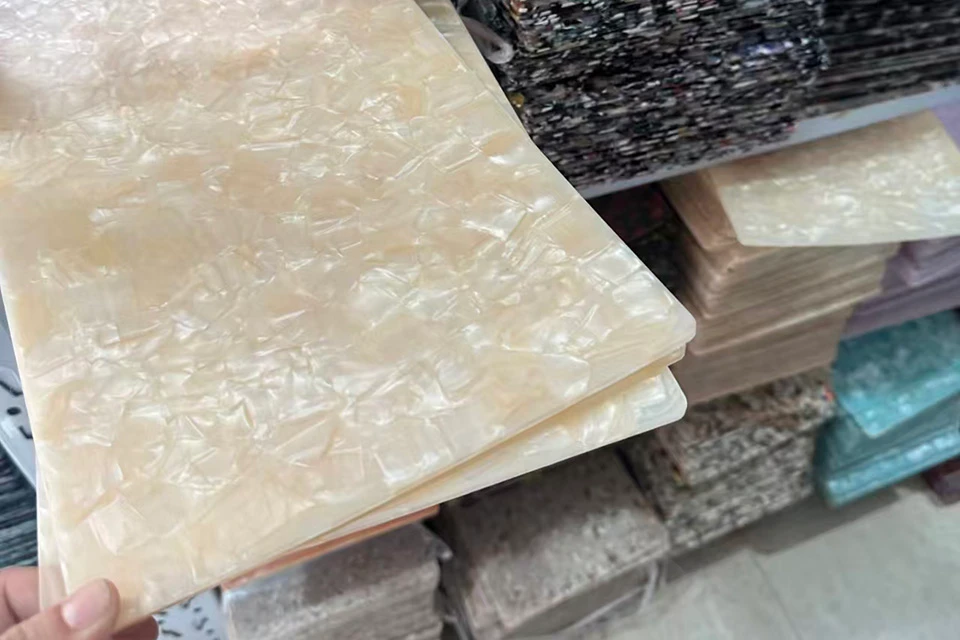
Acetate — specifically cellulose acetate — is a semi-synthetic material derived from natural cotton fibers or wood pulp, processed with acetic acid to create flexible, durable sheets. Unlike petroleum-based injection-molded plastics (such as polycarbonate or standard nylon), acetate is plant-based at its core, which gives it several properties that have made it the material of choice for premium eyewear brands worldwide.
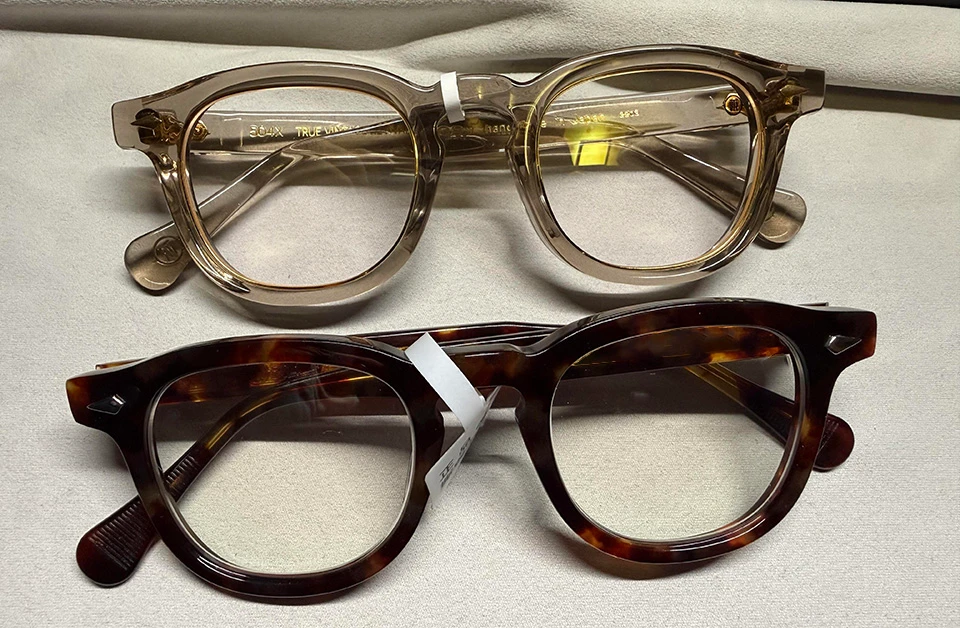
Acetate frames offer rich, deep color possibilities that injection-molded plastics simply cannot replicate. Through a layering and lamination process, manufacturers create complex patterns — tortoiseshell, gradient, marble, crystal, and multi-color combinations — that give each frame a distinctive, handcrafted character. This is why leading fashion houses and independent eyewear brands consistently choose acetate over other plastics for their flagship collections.
Beyond aesthetics, acetate is lightweight, hypoallergenic, and naturally flexible. It can be heated and adjusted to fit individual face shapes, which makes it popular with opticians and end consumers alike. For B2B buyers, acetate commands higher retail price points and stronger margins compared to TR90 or standard plastic frames, making it a strategically valuable material for any eyewear product line.
Key properties of cellulose acetate for eyewear:
- Derived from renewable plant-based sources (cotton or wood pulp)
- Hypoallergenic — safe for sensitive skin, compliant with EU REACH nickel-release standards
- Supports unlimited color combinations through sheet layering and lamination
- Naturally flexible — can be adjusted with heat for a custom fit
- Heavier than TR90 or polycarbonate, but perceived as higher quality by consumers
- Biodegradable variants (bio-acetate) now available for sustainability-focused brands
→ For a detailed comparison of acetate against other popular frame materials, see our guide: TR90 Glasses vs Acetate: Which Eyewear Frame Material is Right for You?
Acetate Material Grades: Mazzucchelli, Chinese, and Japanese Acetate Compared
Not all acetate is created equal. The origin and grade of acetate sheets significantly affect the frame’s appearance, durability, color stability, and retail positioning. Understanding these differences is critical for B2B buyers making sourcing decisions.
Italian Acetate (Mazzucchelli)
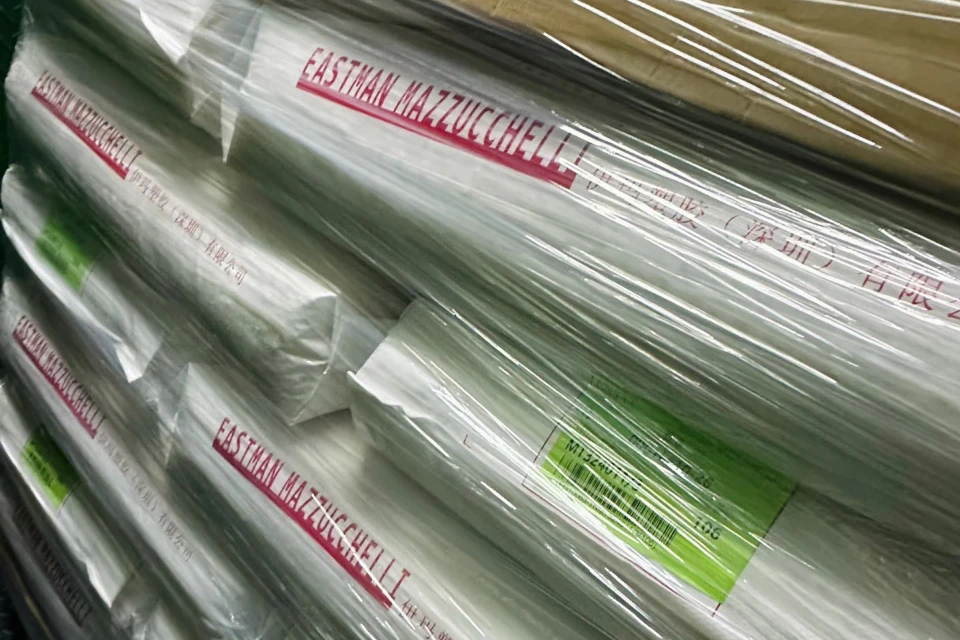
Mazzucchelli 1849, based in Castiglione Olona, Italy, is widely regarded as the world’s leading producer of cellulose acetate for eyewear. Their sheets are known for exceptional color depth, transparency, surface smoothness, and consistency between production batches. Mazzucchelli acetate is the standard choice for luxury and premium eyewear brands globally.
Mazzucchelli also produces M49, a bio-based acetate made with plant-derived plasticizers instead of petroleum-based ones. M49 is 100% biodegradable and ISCC-certified, making it an increasingly popular choice for brands with sustainability commitments.
Best for: Premium and luxury brand positioning, European retail markets, brands that emphasize Italian craftsmanship in their marketing.
Typical cost impact: 30-50% higher raw material cost vs Chinese acetate, which translates to roughly 15-25% higher per-unit frame cost.
Chinese Acetate
Chinese acetate manufacturers — including brands like Jinyu and Jimei — have significantly improved quality over the past decade. Chinese acetate offers good color variety, adequate durability, and a substantially lower price point. For mid-range and value-oriented product lines, Chinese acetate represents excellent cost-performance balance.
However, batch-to-batch color consistency can vary more than Italian acetate, and the surface finish may require more polishing steps to achieve comparable smoothness. Experienced factories know how to compensate for these differences through their finishing processes.
Best for: Mid-range brands, pharmacy and supermarket distribution, price-sensitive markets, high-volume production runs.
Typical cost impact: 30-50% lower raw material cost vs Mazzucchelli.
Japanese Acetate
Japanese manufacturers produce acetate sheets known for exceptional uniformity, elasticity, and resistance to warping under temperature changes. Japanese acetate typically ranges from 3mm to 6mm thickness with very tight tolerances. The production process combines traditional craftsmanship with advanced technology, resulting in sheets that are dimensionally very stable.
Best for: High-end optical frames, markets where fit precision is critical (Japan, Korea), brands emphasizing technical quality.
Typical cost impact: Comparable to or slightly above Mazzucchelli.
Which Grade Should You Choose?
The decision depends on your target market and price positioning:
| Factor | Mazzucchelli (Italy) | Chinese Acetate | Japanese Acetate |
|---|---|---|---|
| Color depth & richness | Excellent | Good | Very good |
| Batch consistency | Excellent | Moderate | Excellent |
| Bio-acetate option | Yes (M49) | Limited | Limited |
| Best market fit | EU luxury, premium brands | Global mid-range, high volume | Japan, Korea, precision optical |
| Relative cost | High | Low | High |
Most established factories, including our facility, work with all three origins and can advise on the best match for your specific product line and target retail price.
→ We are preparing a detailed deep-dive article on this topic: Mazzucchelli vs Chinese vs Japanese Acetate: A Sourcing Comparison for Eyewear Brands — coming soon.
How Acetate Glasses Are Made: The Manufacturing Process
Acetate frame manufacturing is a multi-stage process that combines CNC precision with skilled handwork. Unlike injection-molded TR90 or polycarbonate frames, which are produced in minutes, a single pair of acetate glasses takes 7 to 14 days to complete from raw sheet to finished product. This labor-intensive process is what gives acetate frames their premium quality and finish.
Stage 1: Sheet Cutting
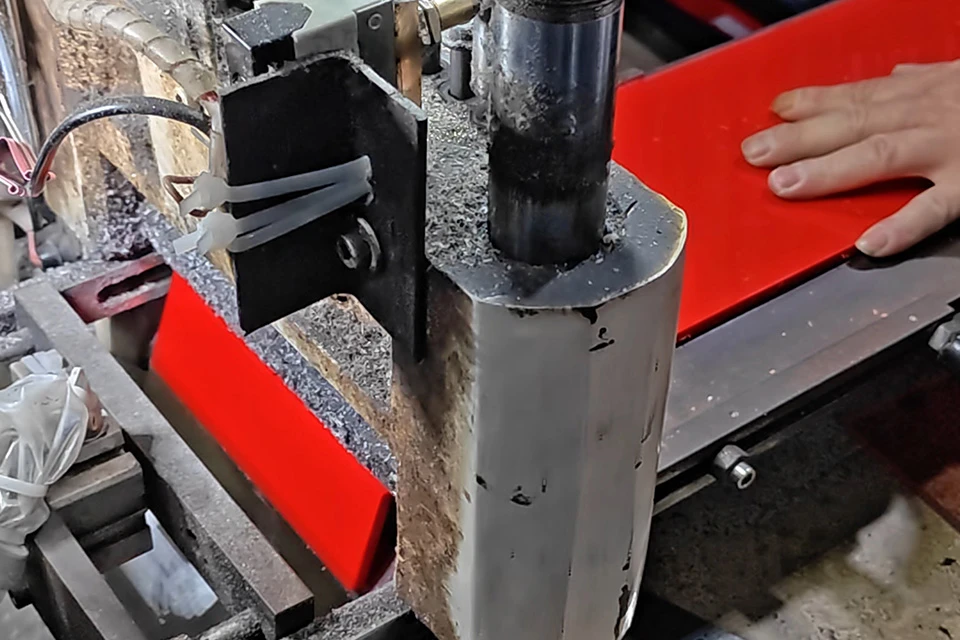
Raw acetate sheets arrive from the material supplier in large blocks or sheets. These are cut into smaller rectangular blanks sized for individual frame fronts and temples. The thickness (typically 4mm to 8mm) is selected based on the frame design.
Stage 2: CNC Milling

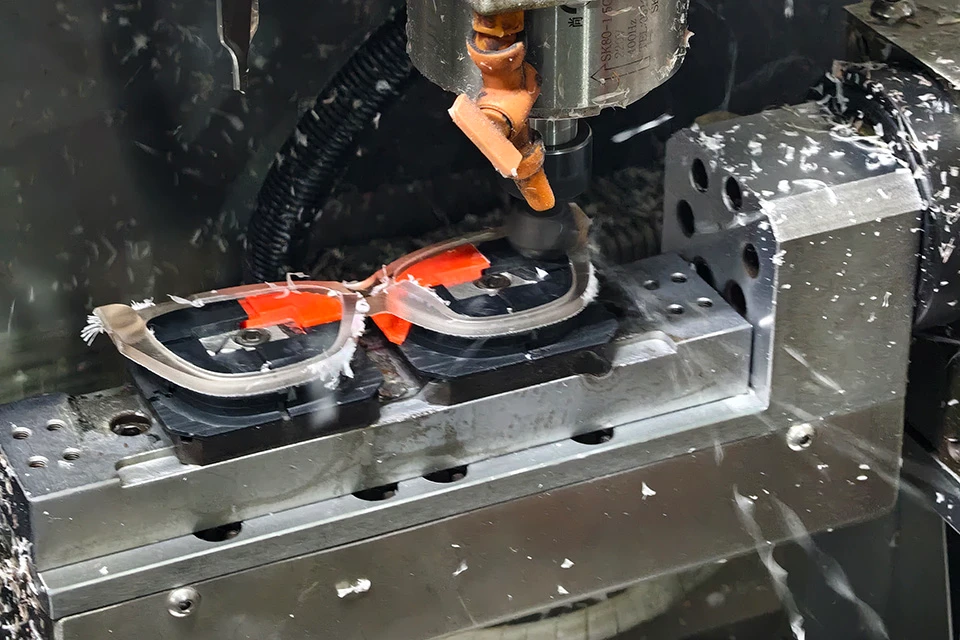
Computer-controlled CNC machines precisely cut the frame shape, lens grooves, bridge contour, and temple profiles from the acetate blanks. This stage determines the frame’s dimensions, shape accuracy, and structural integrity. Modern CNC machines achieve tolerances within ±0.1mm.
Stage 3: Barrel Tumbling
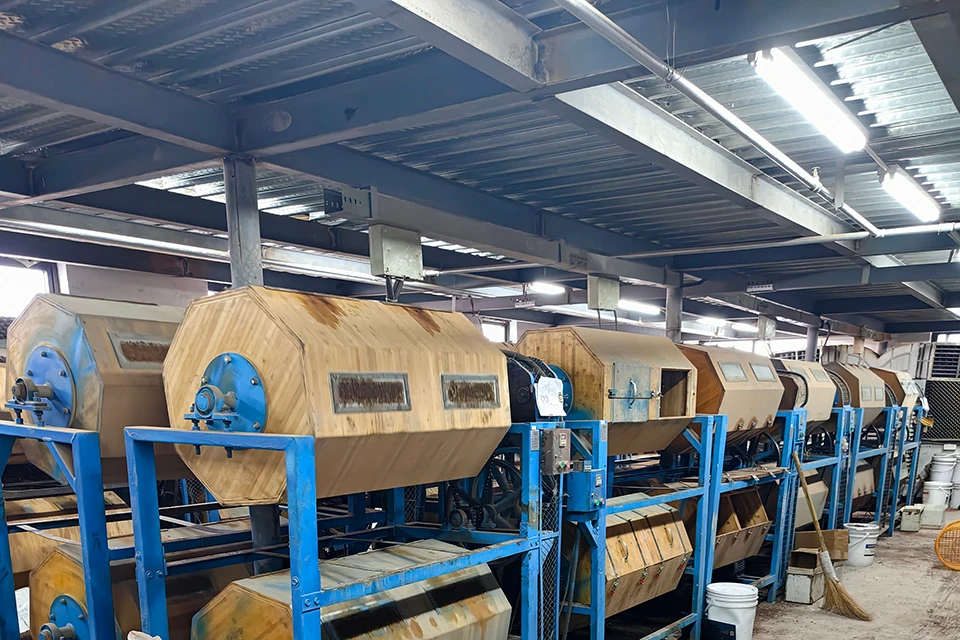
Cut frames are placed in tumbling barrels with abrasive media for 48 to 72 hours. This process smooths all edges, removes tool marks from CNC cutting, and begins to develop the frame’s surface finish. Tumbling is a patience-intensive step that cannot be rushed without compromising quality.
Stage 4: Hand Polishing
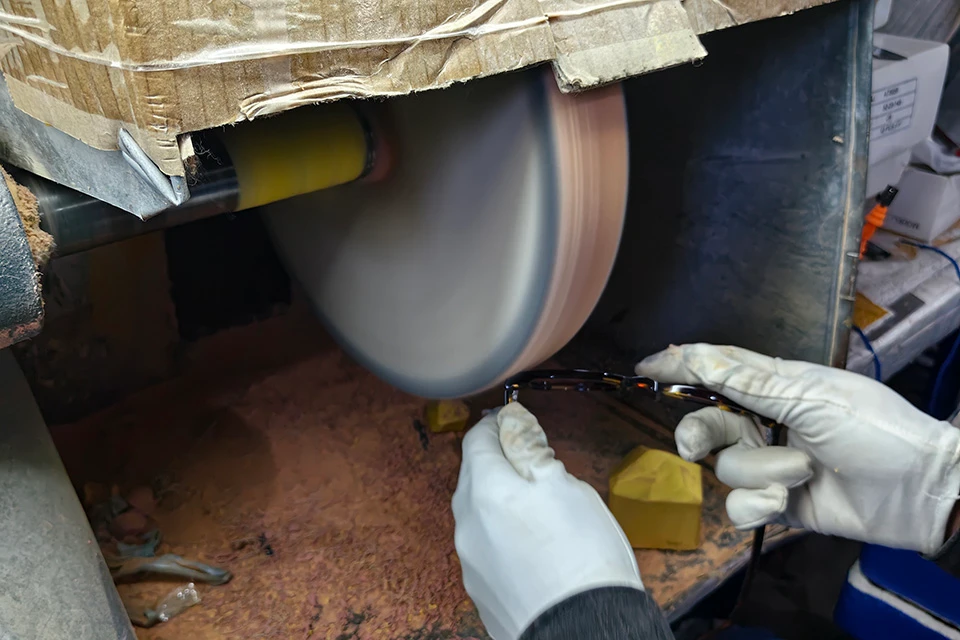
After tumbling, skilled workers hand-polish each frame to achieve the characteristic acetate gloss. This step requires trained craftspeople who know how to bring out the full depth of the acetate’s color and pattern. Hand polishing is what separates premium acetate frames from lower-quality production — it is also the most labor-intensive and costly step.
Stage 5: Hardware Assembly
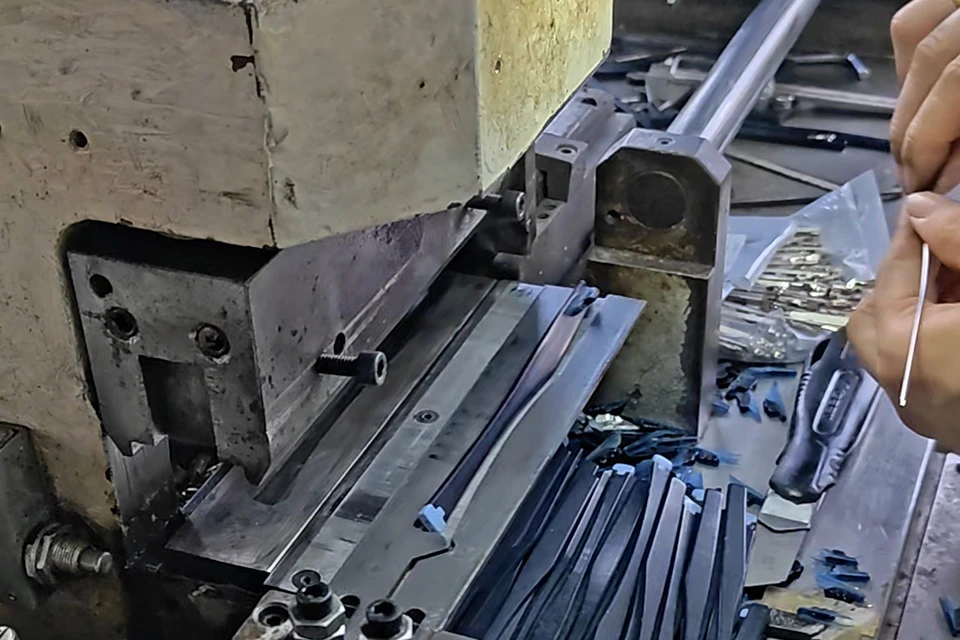
Metal core wires are inserted into the temples for structural strength. Hinges (spring hinges or standard 5-barrel hinges) are attached with screws. Bridge reinforcements and nose pad arms (if applicable) are fitted. Each hardware component must be precisely aligned for comfortable wear and long-term durability.
Stage 6: Lens Fitting
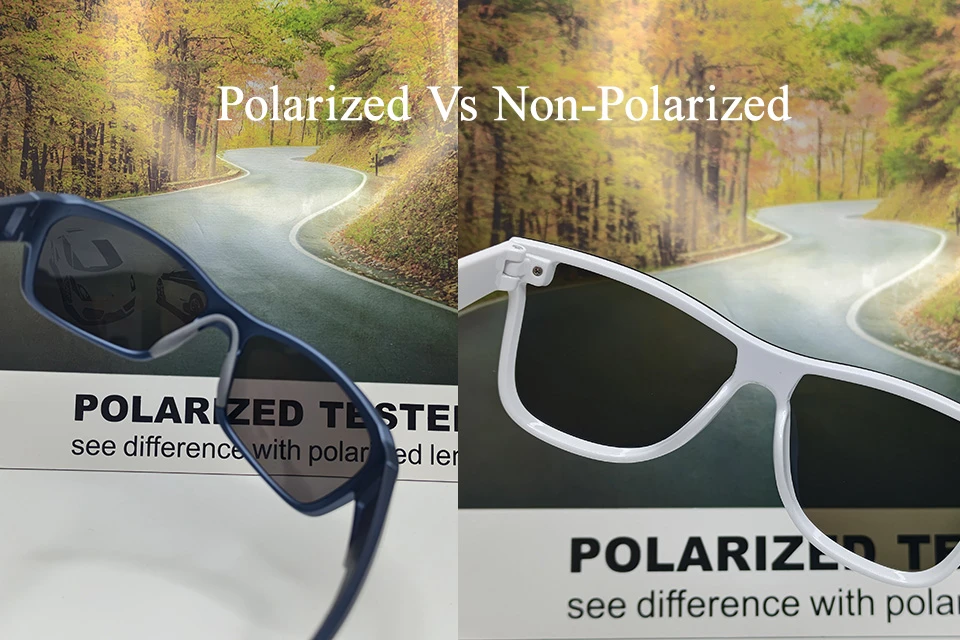
Demo lenses, prescription lenses, or sun lenses (including polarized and blue-light-blocking options) are cut to shape and mounted into the frame grooves. Lens alignment and optical center positioning are checked to ensure they meet international standards.
Stage 7: Quality Inspection
Every frame undergoes final inspection: dimensional accuracy, hinge tension, surface defects, lens fit, temple alignment, and overall cosmetic appearance. Certified factories also test UV protection levels, impact resistance, and material safety at this stage.
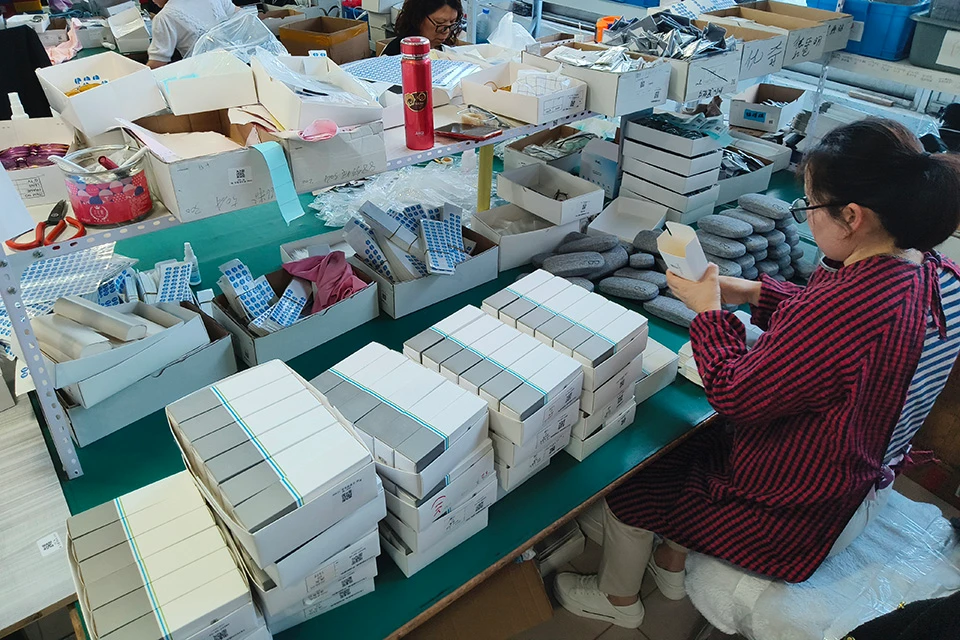
Stage 8: Packaging & Shipment Preparation
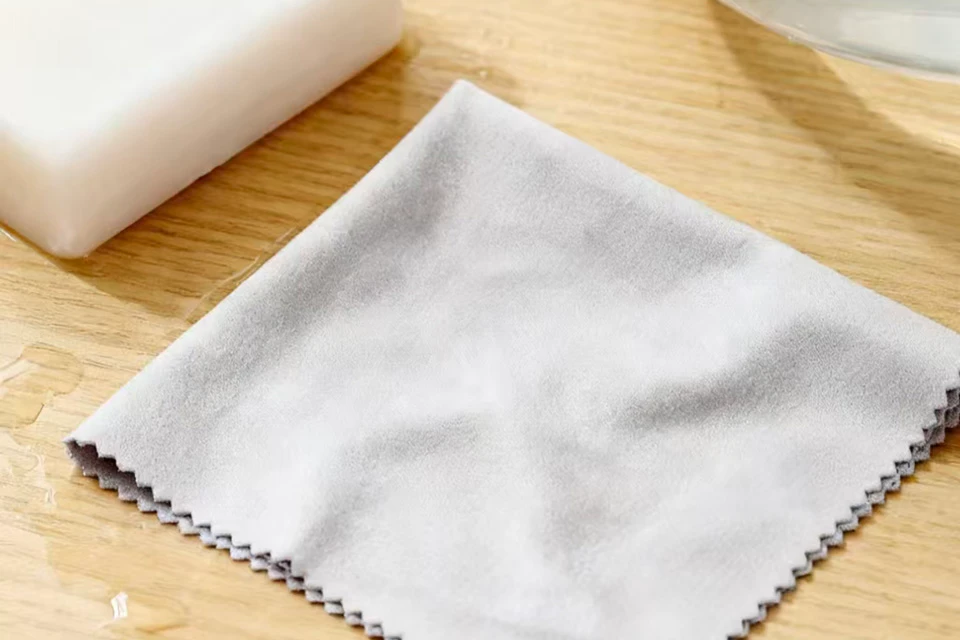
Finished frames are cleaned, paired with accessories (case, pouch, cleaning cloth), and packed for shipment. Export documentation (packing lists, commercial invoices, certificates of conformity) is prepared.
→ For the full production process specific to acetate sunglasses, including polarized lens integration, see: Custom Acetate Sunglasses from China: OEM Manufacturer Selection & Production Guide
OEM vs ODM: Choosing the Right Production Model for Your Acetate Eyewear
When working with an acetate eyewear manufacturer, you have two primary production models:
OEM (Original Equipment Manufacturing)
You provide the design — including technical drawings, dimensions, material specifications, and color selections — and the factory produces it to your exact specifications. OEM is ideal for established brands with in-house design teams who want full control over every detail.
Typical OEM process:
- You submit design files (CAD drawings or detailed sketches with dimensions)
- Factory reviews feasibility and provides a quotation
- Deposit payment (usually 30%) to begin sample production
- Sample delivered in 15-20 days for your approval
- Revisions if needed (unlimited until you are satisfied)
- Balance payment and mass production begins (40-55 days for acetate)
- Quality inspection and shipment
MOQ for OEM acetate frames: Generally 300-600 pieces per model per color.
ODM (Original Design Manufacturing)
The factory designs the frames based on your brief — target market, price range, style direction, and brand positioning. ODM is ideal for new brands, startups, or distributors who want to launch quickly without investing in an in-house design team.
Typical ODM process:
- You share your brand brief and target customer profile
- Factory’s design team proposes 3D renderings and style options
- You select and refine preferred designs
- Sample production and approval (same as OEM)
- Mass production and delivery
MOQ for ODM: Similar to OEM, though some factories offer lower MOQs for designs already in their catalog.
A Third Option: Stock Models with Custom Branding
Many factories maintain a catalog of ready-made designs available for private labeling. You select from existing models, add your logo (laser engraving, pad printing, or metal emblem), and customize the packaging. This option offers the fastest time-to-market and the lowest MOQs — often as low as 50-100 pieces per model.
→ Learn more about our OEM and ODM services: Vistalumo OEM | ODM
Compliance and Certifications for Acetate Eyewear
Different markets have different regulatory requirements. Ensuring your acetate eyewear meets the relevant standards before importing is essential to avoid customs delays, product recalls, or legal liability.
European Union (CE Marking)
Eyewear sold in the EU must carry CE marking, which indicates conformity with EU health and safety directives. For sunglasses, the relevant standard is EN ISO 12312-1 (eye and face protection — sunglasses and related eyewear). For optical frames, the standard is ISO 12870 (spectacle frames — general requirements and test methods).
Additionally, all materials must comply with EU REACH Regulation (Registration, Evaluation, Authorization, and Restriction of Chemicals). This is particularly relevant for acetate frames, as it regulates chemicals in the plasticizers and dyes used in production. Nickel release from metal hinges and hardware must also meet REACH limits.
United States (FDA)
Non-prescription reading glasses and sunglasses are classified as FDA Class I medical devices. Manufacturers and importers must register their establishment with the FDA and list their products. While FDA does not require pre-market approval for these products, compliance with impact resistance standards (FDA 21 CFR 801.410) is mandatory.
South America (Brazil — ANVISA)
Brazil’s health authority ANVISA regulates eyewear imports. Sunglasses must comply with ABNT NBR ISO 12312-1, and importers need to register with ANVISA before commercial distribution. Requirements for other South American countries vary; some follow EU standards, others have their own national frameworks.
Quality Management
Leading manufacturers hold ISO 9001 quality management system certification, which provides a systematic framework for consistent production quality. While not legally required, ISO 9001 is increasingly expected by major retail chains and optical distributors as a minimum supplier qualification.
→ A detailed compliance breakdown by market is coming soon: CE and FDA Compliance for Acetate Eyewear: What Importers Must Know — coming soon.
How to Choose a Reliable Acetate Eyewear Manufacturer
Selecting the right factory partner is the single most important decision in your sourcing process. Here are the key factors experienced buyers evaluate:
1. Factory vs Trading Company
This is the most fundamental question. A factory (manufacturer) produces the frames in-house, giving you better pricing, quality control, and customization flexibility. A trading company acts as an intermediary, sourcing from multiple factories and adding a markup.
How to tell the difference:
- Request a factory video tour or visit in person
- Ask for photos of production lines, not just showrooms
- Check if they can explain the manufacturing process in technical detail
- Verify business registration documents (a manufacturer will have a production license)
2. Material Sourcing Transparency
Ask the factory which acetate suppliers they work with. A credible manufacturer will openly name their material sources (Mazzucchelli, Jinyu, Jimei, etc.) and may even show you the raw sheet inventory. Avoid factories that are vague about their material origins.
3. Certifications and Test Reports
Request copies of their CE, FDA, and ISO 9001 certificates. Ask to see recent lab test reports (UV transmission, impact resistance, REACH chemical testing). Verified certifications demonstrate that the factory has invested in compliance infrastructure.
4. Sample Quality
Always order samples before committing to mass production. Evaluate: surface finish quality, hinge smoothness, color accuracy vs the acetate sheet sample, lens fit precision, and overall weight and balance. Compare samples from 2-3 factories before deciding.
5. Communication and Responsiveness
Your factory partner needs to communicate clearly and promptly — especially when managing custom orders across time zones. Evaluate their English proficiency, response time, willingness to answer technical questions, and ability to provide regular production updates.
6. Production Capacity and Lead Times
Confirm their monthly output capacity, current order backlog, and realistic lead times for your order size. A factory producing 100,000+ pieces per month can handle large orders reliably, while smaller facilities may offer more flexibility for custom designs but less capacity.
7. After-Sales Support
Understand their policy on defects, warranty, and spare parts. Reliable manufacturers offer a defect replacement guarantee (typically 1-2% of order quantity as free spare parts) and a 12-month quality warranty.
→ See our FAQ for specific details on our MOQs, lead times, materials, and payment terms: Vistalumo FAQ
Acetate Eyewear Product Categories: What You Can Source
Acetate’s versatility makes it suitable for multiple eyewear product categories. A full-service manufacturer can supply all of the following under one roof:
Acetate Optical Frames
Prescription-ready frames for optical retail and online eyewear brands. Available in full-rim, semi-rimless, and combination (acetate front + metal temple) styles. Diopter-ready with standard demo lenses that can be replaced by the optician.
→ Browse our collection: Acetate Glasses
Acetate Sunglasses
Fashion and performance sunglasses with UV400 protection. Available with standard tinted lenses, polarized lenses (TAC), photochromic lenses, and mirror-coated options. Styles range from classic aviator and wayfarer to cat-eye, round, and oversized designs.
→ Browse our collection: Acetate Sunglasses
Acetate Reading Glasses
Pre-assembled reading glasses with magnification lenses from +1.00 to +4.00 in 0.25 increments. Ideal for pharmacy, supermarket, and online retail channels. Available with optional blue-light-blocking coating for screen-use positioning.
→ Browse our collection: Reading Glasses
Combination Frames
Frames that combine an acetate front piece with metal or titanium temples, offering a premium mixed-material aesthetic. These hybrid designs are trending strongly in European and North American markets for both optical and sun categories.
→ Explore our titanium options: Titanium Glasses Frames
Industry Trends Shaping Acetate Eyewear in 2026
Several trends are driving demand and shaping product development in the acetate eyewear sector:
Sustainability and Bio-Acetate. European retailers increasingly require sustainable material certifications. Bio-acetate, made with plant-based plasticizers, is becoming a mainstream option rather than a niche premium. Brands that adopt bio-acetate early gain a marketing advantage and future-proof their supply chain against tightening EU environmental regulations.
→ We are preparing a detailed comparison: Bio-Acetate vs Standard Acetate: Why Sustainable Eyewear Materials Matter for Your Brand in 2026 — coming soon.
Bold Colors and Thick Frames. After years of minimalist metal frames dominating, the market is shifting back to bold, chunky acetate designs. Crystal, translucent pastels, rich tortoiseshell variations, and color-block laminations are performing strongly at retail.
→ We are preparing a trend report: Acetate Glasses Color Trends 2026: What Wholesale Buyers Need to Stock This Year — coming soon.
Blue-Light-Blocking Integration. The line between optical frames and functional eyewear continues to blur. Acetate frames sold with integrated blue-light-blocking lenses — positioned for screen use — now represent a significant and growing sub-category in both optical and non-prescription channels.
Direct-to-Consumer Brand Launches. Lower MOQs and accessible OEM/ODM services have made it easier than ever for entrepreneurs to launch their own acetate eyewear brands. Many new brands start with 5-10 SKUs, test through e-commerce channels, and scale based on sell-through data.
→ We are preparing a step-by-step guide for brand founders: How to Start Your Own Acetate Eyewear Brand with a Chinese OEM Manufacturer — coming soon.
Handmade vs Injection-Molded Positioning. As the market bifurcates between premium and mass-market, buyers are making more deliberate choices about production methods. Understanding the quality, cost, and positioning trade-offs between handmade acetate and injection-molded frames is becoming essential for portfolio planning.
→ We are preparing a detailed comparison: Handmade Acetate Glasses vs Injection-Molded Frames: Quality, Cost and MOQ Compared — coming soon.
Start Your Acetate Eyewear Project with Vistalumo
With over 10 years of experience as a direct acetate eyewear manufacturer, we serve wholesalers, distributors, and brand owners across Europe, North America, and South America. Our facility produces 100,000+ frames per month with full OEM/ODM capability, CE, FDA, and ISO 9001 certification, and a dedicated multilingual sales team.
Whether you need 100 pieces of a stock model with your logo or 10,000 pieces of a fully custom design, we are here to support your project from first sketch to final delivery.
What we offer:
- Acetate sourced from Mazzucchelli (Italy), Jinyu, Jimei, and other leading suppliers
- Full OEM/ODM design, sampling, and mass production services
- Custom branding: laser engraving, pad printing, metal logo embedding
- Complete packaging solutions: cases, pouches, cloths, retail-ready boxes
- CE, FDA, ISO 9001 certified production with REACH-compliant materials
- Flexible shipping: FOB, CIF, DDP, with FBA support for Amazon sellers
→ Contact our team for a free quote
→ Learn more about our OEM/ODM process
→ View our About page and factory overview
Related Articles in This Guide Series
- TR90 Glasses vs Acetate: Which Eyewear Frame Material is Right for You?
- Custom Acetate Sunglasses from China: OEM Manufacturer Selection & Production Guide
- Mazzucchelli vs Chinese vs Japanese Acetate: A Sourcing Comparison for Eyewear Brands
- Bio-Acetate vs Standard Acetate: Why Sustainable Eyewear Materials Matter for Your Brand in 2026 (coming soon)
- How to Start Your Own Acetate Eyewear Brand with a Chinese OEM Manufacturer (coming soon)
- Acetate Glasses Color Trends 2026: What Wholesale Buyers Need to Stock This Year (coming soon)
- Handmade Acetate Glasses vs Injection-Molded Frames: Quality, Cost and MOQ Compared (coming soon)
- CE and FDA Compliance for Acetate Eyewear: What Importers Must Know Before Sourcing (coming soon)
This guide is written and maintained by the Vistalumo Eyewear team — a direct acetate eyewear manufacturer based in Yiwu, Zhejiang, China, with 10+ years of experience serving global wholesale and brand clients. Last updated: March 2026.