How to Clean Cleaning Cloth for Glasses: Maintenance for Retailers and Buyers
For those buyers calling here for wholesale, if you want to educate yourself as a guide for your clients, you should learn about the lifecycle of a microfiber lens cloth. In this article, we discuss why a quality cleaning cloth is crucial for lens protection, how to maintain it, and provide specific washing guidelines that allow the cloth to continue working effectively.
What makes the microfiber cleaning cloth essential for eyewear?
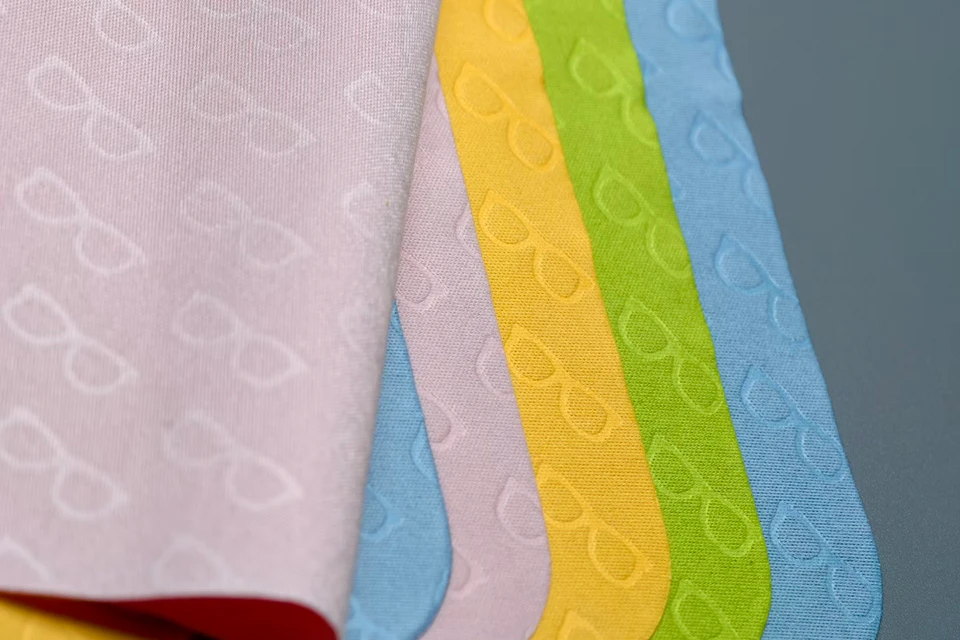
When customers are buying reading glasses or prescription correction frames, they expect clarity. These tools do collect oils and debris quickly. The main weapon in the fight against smudges is the eyeglass cleaning cloth. Unlike a shirt sleeve or paper towel, a microfiber cloth is designed to trap particles rather than simply pushing them around. The fibers are split during manufacture, resulting in ‘zillions’ of hooks and grabbing dust and dirt. Using a proper cleaning cloth keeps the prescription lens from micro-scratching. Most fabrics contain coarse fibers that damage coatings. Because they are soft and absorbent, eyeglass wearers use specific cloths. For the retailer, stocking a quality eyeglass cloth is as important as the frame. You want the customer to experience your product as intended; if a user tries to clean your glasses with inferior material, the result may be permanent damage.
Why does a dirty cloth stop working effectively?
When your lens cloth ceases to attract oil from your skin and environmental dust, that’s it; it cannot absorb anything else. Tell your customers when they complain that they can’t clean their glasses anymore, that the obvious fault doesn’t lie with the spray or the lens: the dirty towel will only smear the grease over the surface.
A dirty towel is also a gritty one. Gritty, hard particles of grit may fill it; and when the eye user wipes his or her eyeglasses with a grit-filled towel, he or she sands the surface of his lens. Certainly, such a lens cannot be satisfactory—it is sure to present a hazy vision to the wearer. The retailer must educate his or her buyers in the fact that the towel they are using needs attention. To keep the cloth clean is the only way of keeping the eyeglasses in fit working trim.
How often should users wash their cleaning cloth?
How often to wash is determined by how much you use your cloth. Regularly washing is the rule. If you’re someone who uses your eyeglass cleaning cloth every day, wash it out once a week. It’s easy to take your cloth on the go and let it pick up too much oil. A useful retailer rule to pass along to customers is: if the cloth leaves a streak, you need to wash your cloth.
Regularly washing contributes to letting the fibers release dirt they’ve caught in holding chambers. It allows the microfiber to open back up. For eyeglass owners working around lots of dust and industrial products, their cleaning cloth may need attention every few days. Cleaning cloths are designed for hundreds of washes. Little does the user know. Using a smudgy cloth will affect his or her ability to see clearly.
What is the best way to clean your microfiber cloth by hand?
The safest way to wash your microfiber cloth is by hand. This prevents harsh agitation from ruining your delicate cleaning cloth.
Give the cleaning cloth a good few shakes to remove the most dust and dirt. Turn the tap on with cool or warm water; avoid scalding. Hang to air dry. Add a few drops of mild soap. Use a bleach-free detergent or clear dish soap.
Let the cloth soak in the soapy solution. This allows the oils to be drawn off the fibers. Once the fabric has mixed with the soapy mixture for five minutes, gently rub the fabric against itself to remind the cloth who’s boss. Rinse well under running cold water. Let the water run until your cloth no longer has a single suds active. Remove excess fluid. Hang to air dry. Hang to air dry. This process is the gold standard for cleaning microfiber lens materials.
Can you wash a glasses cloth in a washing machine?
Can you throw them in the washing machine? Technically, yes, subject to stringent rules. As a wholesaler, you should tell your customers never to wash these cloths unless you’re certain you can wash them together with non-lint fabrics. Cotton manufacturing will lint all over your microfiber. “Throw the blighter in with your cotton towels and the microfiber will collect lints from the cotton,” absolutly, “Your glasses cloth will come out covered with fuzz, and you’ll no longer be able to use it to clean your lenses. Use a mild detergent free of additives. Set your machine for delicate using cold water.
Does hot water or cold water work better for cleaning?
There is some disagreement about temperature. A warm, dry cloth is best for dissolving oils. Hot water should also not be used recklessly. Even with the lowest grade of eyeglass cleaning cloth, boiling water will untwist the fibers. Cold water is safe enough, but it is not as effective a solvent for heavy grease as warm water.
For the rinse cycle, use cold water. This way, you can be sure that all of the soap has been washed free of the fabric. If you use water above 140°F (60°C), you will risk melting the tips of the fibers a little, lessening their softness and affecting their effectiveness. The goal is to clean your microfiber, not change it.
When should you throw the cloth away and replace it?
Good cleaning cloths don’t last forever. Fibers fray, colors fade, and soon you’ll notice how rough the texture of the cleaning cloth feels, or how often it leaves unexpected lint behind. At that point, when washing doesn’t fix the issue, just toss it in the trash. Or, if you happen to have it loaded up with metal from some machine or paint from a craft project, discard it immediately, as it will only scratch your lenses. Discard immediately! It will only scratch your lenses.
Wholesale buyers should categorize the eyeglass cleaning cloth as semi-consumable goods. They last a long time, but must eventually wear out, at which point a new one is needed for health reasons. If you have found yourself scrubbing harder to clean your glasses, the one you’re holding is no longer effective. A new lens cloth glides over and absorbs grease or grime right off, instantly. It’s easy to keep clean, which means it’s easy to toss out.
How does proper cloth care protect the eyeglass investment?
Eyeglass lenses are sophisticated optical tools. They often come with anti-reflective, anti-scratch, and hydrophobic coatings. A dirty, grit-filled glasses cloth can act like sandpaper on these coatings. Proper eyeglass care begins with the tool used to wipe them. By keeping a clean cloth, the user preserves the surface of the lens.
This extends the life of the spectacle. It keeps the “starburst” effect at bay, which is caused by micro-scratches. Clear vision depends on a clear surface. For the wholesale buyer, educating customers on how to treat microfiber cloths adds value to the sale. It reduces returns based on a “defective coating” that was scratched by a dirty cloth. Catching dust and dirt with a clean tool spares the glasses.