At a glance
- Project duration: 35 days, first inquiry to final delivery
- Mold tooling: Compressed from a standard 30 days to 15 days
- Prototypes produced: 6 finished white PC sunglasses samples
- Critical save: Dispatched a car to Shanghai Pudong International Airport for a passenger hand-carry when DHL tracking showed the package would arrive three days after the editorial shoot
- Outcome: Samples delivered on time; shoot completed on schedule
- Client: First-time OEM project with a Berlin-based fashion label
- Frame type: Wraparound PC sunglasses, white finish, mirrored lens, custom temple emblem
Summary. A Berlin-based fashion brand needed fully custom-molded PC sunglasses for an overseas editorial shoot with a 35-day window from inquiry to delivery. We compressed standard 30-day injection mold tooling to 15 days, redrew their unusable surface-model 3D file into a manufacturing-ready STEP solid, and — when DHL Express was set to arrive three days after the shoot — dispatched a car directly to Pudong Airport so the samples could be hand-carried out by a passenger the client booked. This is the full timeline.
The names of the client, their brand, the contact person, and the editorial shoot location have been changed or removed throughout this article. Everything else — the dates, the quotes, the engineering decisions, the prices — is exactly as it happened.
The starting point: a 35-day clock and an FBX file
On a Monday in early March, an inquiry landed in our Alibaba International Station inbox. The buyer — let’s call him M. — was the founder’s contact at a German fashion brand based in Berlin. They had a custom sunglasses concept ready to go: wraparound, sports-aesthetic, white PC frame, mirrored lens, a discreet metal-style logo on the temple. They needed prototypes delivered to Germany by April 10. After that, the samples had to travel onward to an overseas city for a video production scheduled to start April 13.
That timeline — first inquiry to physical samples in the buyer’s hands, including a brand-new injection mold — is tight in any reading of the eyewear industry. Standard mold lead time alone is 30–35 days. Add prototype refinement, sample production, and DHL Express, and a 35-day window is, frankly, the edge of what’s physically possible. For the unpressured version of the same road, see the standard eyewear OEM and ODM process, where 40 to 45 days of production is the planning norm.
We replied the same day.
Reply One: getting the questions right before getting the answers right
Our first response wasn’t a quote. It was a structured reply to every line of the buyer’s brief, written in red directly on the Word document they’d sent us. Mold cost, sample cost, MOQ, materials, lens options, packaging, compliance — every item answered concretely, with a clear “yes,” “no,” or “depends on this specific input.”
A few of the answers mattered more than others. The most important one was this:
“This file (FBX format) is a triangulated surface model, not an engineering solid model. Simply put, it only has the ‘skin,’ no ‘flesh’ — it represents only the outer shape, without internal structure, wall thickness, hinge mechanism for the temples, or other engineering details.”
In plain language: the 3D file the buyer had sent over was a rendering file, not a manufacturing file. It described how the glasses should look, not how they should be built. We could not cut a mold from it.
For a B2B eyewear buyer, that distinction is the entire ballgame. Many factories will accept whatever file the buyer sends, charge for the mold, and then quietly improvise the engineering — leaving the buyer with a frame that doesn’t match the rendering, hinges that fail, or wall thicknesses that warp during cooling. We flagged this on day one, in writing, before any deposit was discussed.
We also told the buyer what would actually happen if they pushed for express mold tooling: 30 days is the realistic floor, not a target we could promise to beat without a serious compromise on quality.
The buyer’s response was a single message: “can you please mold express?”
Our reply: “Normally molding we need at least 30 days. Hope you understanding.”
We didn’t oversell. We told them what was true.
Buying time with a 3D-printed proof
The next morning, while the quote was still being negotiated, our engineering team did something the buyer hadn’t asked for. We took their FBX file, cleaned the geometry, and 3D-printed a one-piece gray frame — a physical sample of the shape only, with no hinges, no lens, no finish. We photographed it on the bench and sent it across.
The buyer’s reply, on the morning of March 22, came in two messages:
“that would be amazing — can it be pure white?”
“you did a amazing job — let me know how to process so we dont loose any more time”
The 3D-printed shell did three things at once. First, it confirmed the geometry was producible — both for us and for the buyer’s confidence. Second, it gave them something tangible to show their internal creative team while the mold was being machined. Third, and most importantly, it bought us permission to begin the mold without waiting for the final 3D file revision.
That same day we committed to a compressed mold schedule: 15 days for tooling instead of 30, with the buyer paying the deposit immediately so the CNC operators could start the next morning.
Redrawing the file the buyer didn’t know they needed
Between March 23 and March 29, our engineers redrew the customer’s surface model as a proper STEP-format solid. Wall thicknesses were assigned. Hinge pockets were carved out. Temple curvature was matched to a real men’s facial size. A drafting file went back to the buyer with four orthographic views and exact dimensions.
The buyer’s reply was telling: “we need to trust you on that since we gave you the sizing for what the person who is going to wear was fitting the best.”
This is one of those moments where the relationship between a B2B buyer and an overseas factory either solidifies or collapses. A buyer half a world away cannot verify the engineering. They can only verify whether the factory is being honest about what it knows and what it doesn’t. We told them which dimensions we adjusted, why we adjusted them, and what the trade-offs were.
They approved the file.
The real deadline, finally explained
On April 1, the buyer told us why April 10 mattered so much. There was a video production scheduled for April 13 in an overseas city — not in Germany. The team was leaving Germany on April 12. Customs clearance in the destination country was complex enough that direct shipment from China to the shoot location wasn’t reliable on the timeline available. The plan was: ship to Berlin → fly out with the samples in luggage on April 12 → shoot on April 13.
The buyer wrote: “thats the dilemma we are facing right now.”
Our reply: “OK, I got your points. I will push to the mold process as fast as we can.”
We didn’t promise. We pushed. Our project lead checked in with the mold workshop every twelve hours and shifted the QC queue so that the moment the first molded frames came off, they’d go straight to assembly instead of waiting in the inspection batch.
April 10–11: Samples done, courier booked
Six finished samples came off the line on the evening of April 10. The buyer asked for photos before approving shipment — standard practice. We sent them the next morning along with the question: “Where we ship to?”
The buyer’s preference was DHL Express, highest priority, direct to the overseas shoot location. We took the samples to the DHL facility ourselves rather than waiting for a pickup window.
That same afternoon, the buyer checked the tracking number.
The estimated delivery date was April 16. Three days after the shoot.
The 24-hour rescue: from Yiwu to the airport
It’s worth pausing here. In a 35-day project, the operationally difficult part isn’t the engineering or the manufacturing — those are skill problems with known solutions. The hard part is logistics in the final 72 hours, when half the failure modes are outside the factory’s control.
The buyer’s first idea was extraordinary. They asked if we knew anyone flying from Shanghai or Guangzhou to the shoot city in the next 48 hours. They would pay for the flight and a generous fee on top. They were prepared, in their words, to send “somebody to the shanghai or guangzhou airport and speak to people who are flying” to ask if they’d hand-carry a small box.
This was not a metaphor. They were genuinely going to recruit a stranger at a Chinese airport.
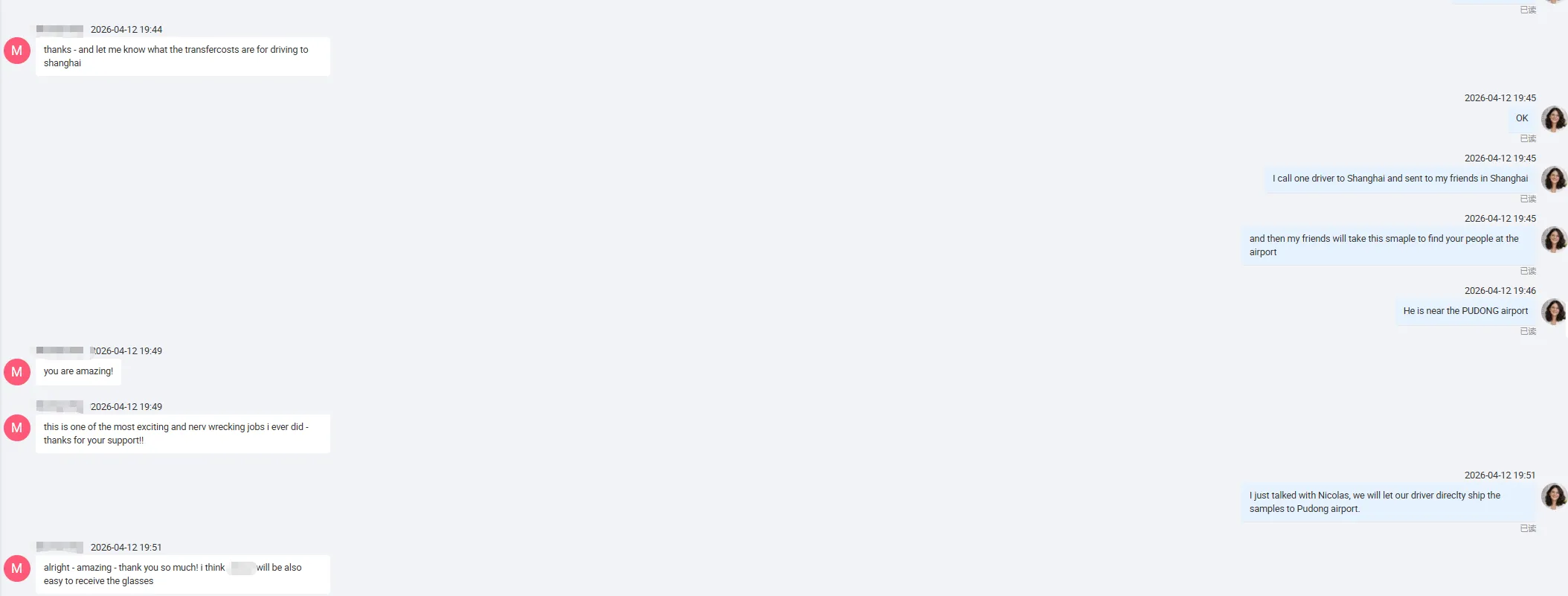
We checked our schedules. We didn’t have anyone flying that route in the window. But we did have a driver, a car, and a colleague named Nicolas who could authorize the cost. So we proposed this instead: we’d dispatch a car from our facility in Yiwu directly to Pudong International Airport in Shanghai and hand off the samples to whoever the buyer’s team managed to find at the airport gate.
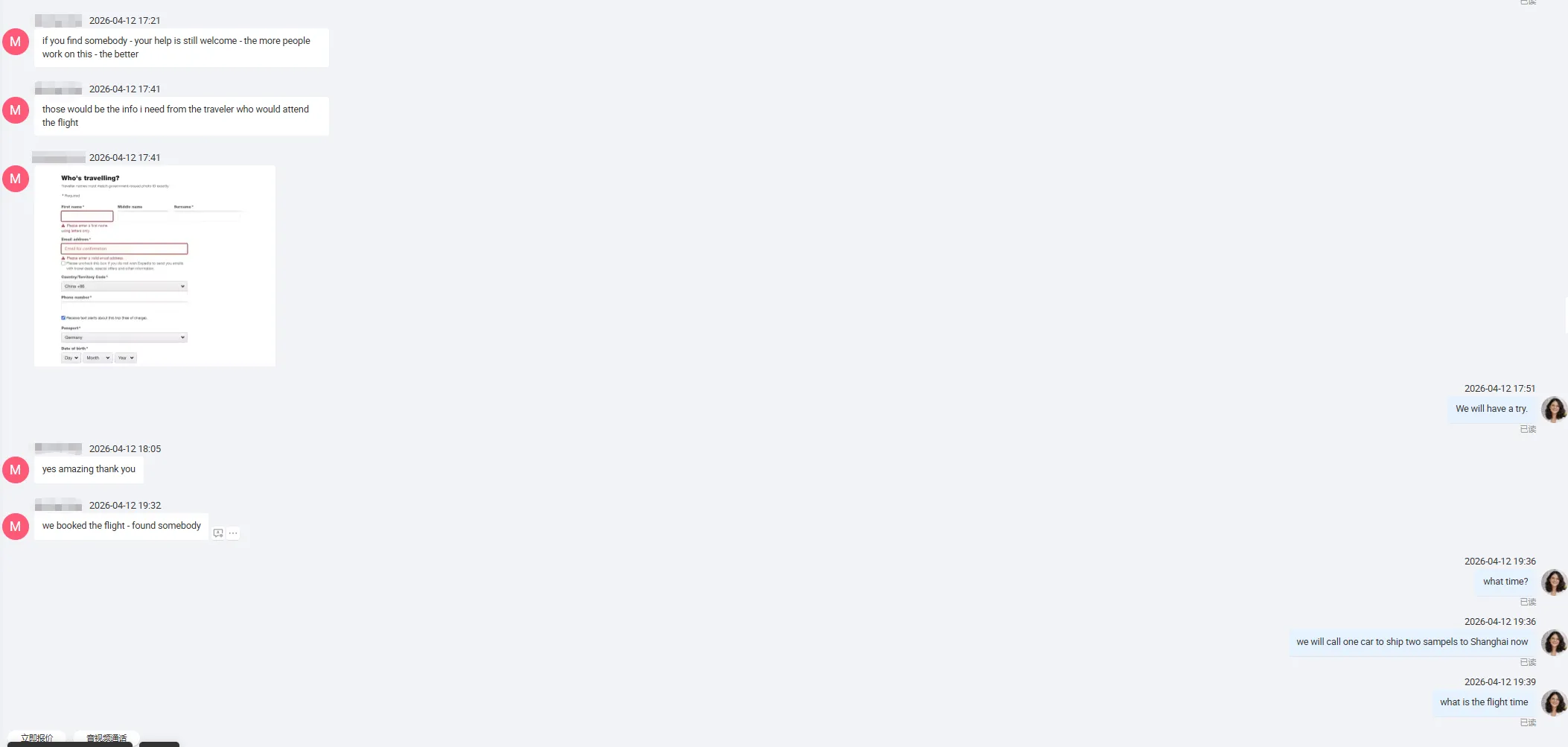
The buyer found a traveler within hours. They booked the flight, sent us the passport details, and confirmed the arrival time at Pudong: 3:00 PM the next day.
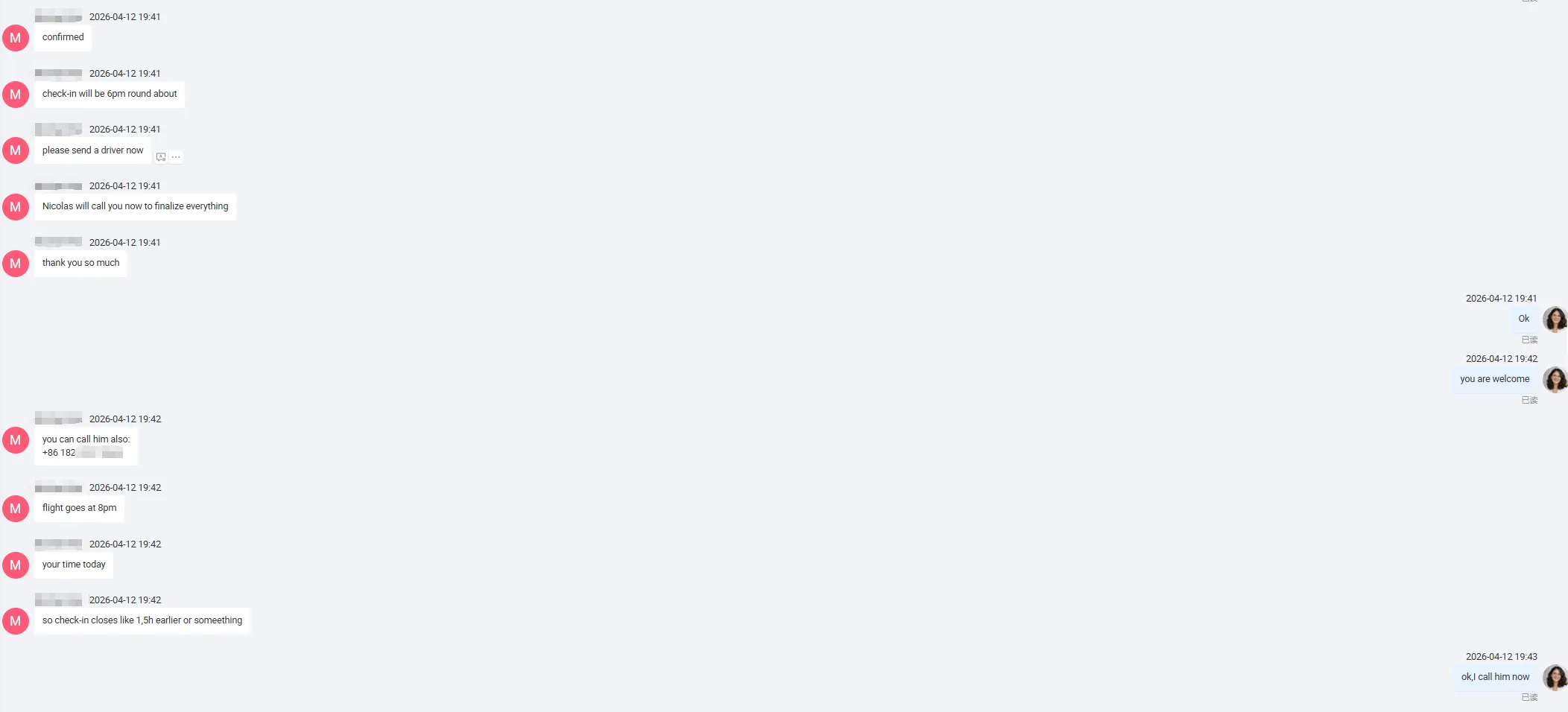
Our car left Yiwu in the morning. The samples were at Pudong’s domestic-arrivals meeting point before the traveler landed.
“I just do what I should do”
When the samples made it through to the shoot city the following morning, the buyer’s message read: “thank you so much - you are the best <3.”
Our reply, sent at 02:47 local time: “you are welcome. We cooperated well and do this. But you should know next time you should give more time to mold. Which can make the mold more perfect.”
That second sentence matters. The mold could have been better with another two weeks. We knew it. We told them so on the day the order completed, not on the day the next inquiry came in. They replied: “yes haha — we know feedback for sample will follow and we will plan more time for future products.”
That’s the relationship we’re trying to build. Not the one where every order is a triumph and every promise is delivered on the original timeline. The one where the buyer trusts what we say both when we’re proud of the work and when we’re being candid about the limits.
What this case actually demonstrates
The surface metrics are easy to list: 35 days from first inquiry to delivery, 15-day mold compression, 6 prototypes, first-pass approval on the engineering file. They’re true. But they’re not the case study.
The case study is in the small habits the story happened to demonstrate clearly because the timeline was severe:
- We tell buyers what’s wrong with their files on day one, not after the deposit clears. The FBX flag cost us nothing and saved them a month of wasted production.
- We make small physical proofs when written specs aren’t enough. The 3D-printed shell wasn’t on the spec sheet — it was the fastest way to turn a brief into a shared visual reference.
- The job isn’t finished when goods leave the warehouse — it’s finished when the box is in the buyer’s hands. Even if that means dispatching a car to the airport.
This is how we work when nothing’s on fire, too.
A note on what we make and who we make it for
VISTALUMO Eyewear is an OEM and ODM manufacturer based in Yiwu, China. We specialize in acetate frames, reading glasses, optical frames, and custom-molded sunglasses for B2B clients — fashion brands, distributors, wholesalers, and startup eyewear labels — across Europe, North America, and South America. We hold CE compliance for the EU market, with full test documentation available on request. Our minimum order is typically 1,200 pieces per SKU, though we make exceptions on a project-by-project basis for new brands with promising concepts.
If you have a frame concept, a reference file, or even just a sketch, we’re happy to start the conversation the same way we started this one: by telling you honestly what we can do, what we can’t, and what it will actually take.